Ibis Styles Bangkok Silom - 3 stars hotel - Wat Arun


Wat Arun
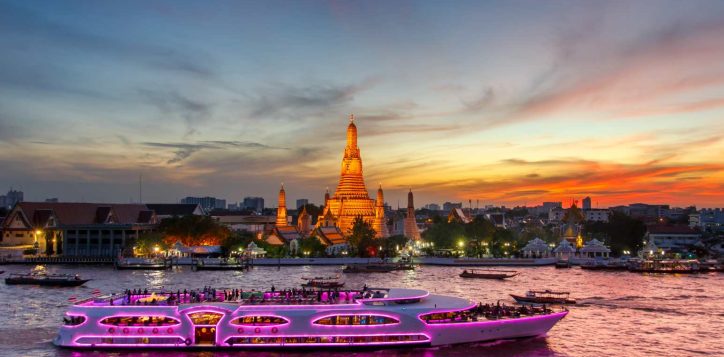
Rising from the west bank of the Chao Phraya River, Wat Arun Ratchawararam Ratchawaramahawihan, known simply as Wat Arun, or the Temple of Dawn, is one of the most recognizable landmarks in Bangkok. Its porcelain-covered central prang catches the morning light in a way that has made it a symbol of the city itself, and a stop on almost every visitor’s itinerary alongside Wat Pho just across the water.
The History of Wat Arun
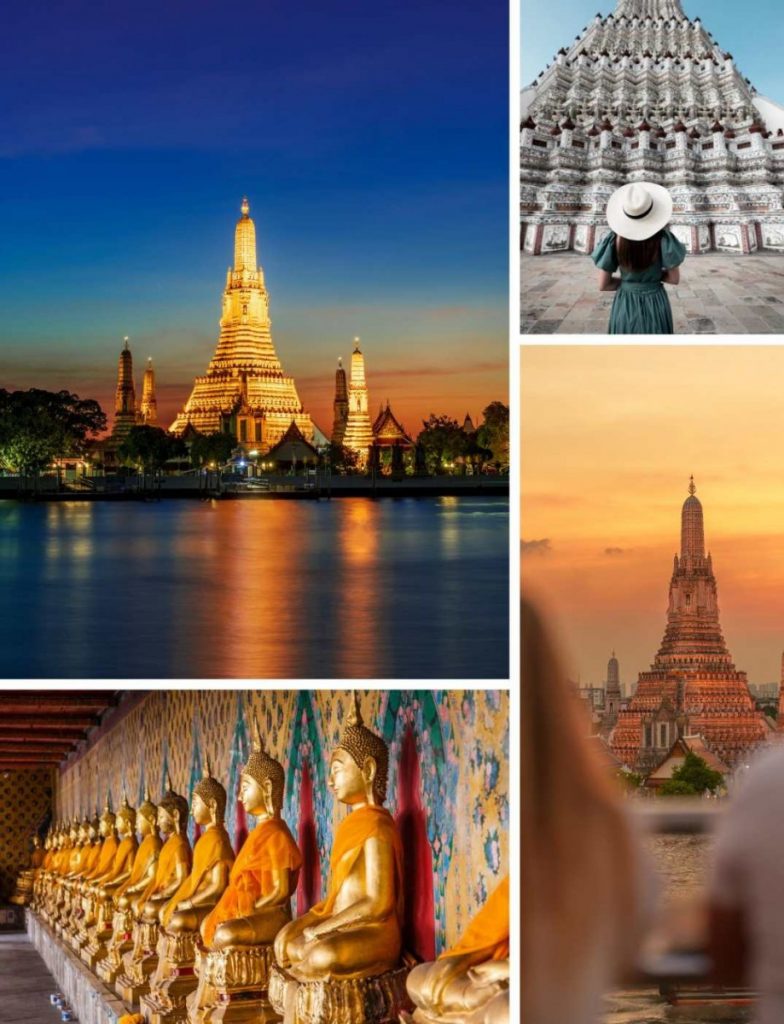
The temple’s story begins in the Ayutthaya period, when the site was known as Wat Makok. It rose to prominence centuries later when King Taksin arrived at the location at dawn after the fall of Ayutthaya, an event that eventually gave the temple its name, a tribute to Aruna, the Hindu god of dawn.
The Wat Arun most visitors recognize today largely took shape in the early Rattanakosin era, when King Rama II and King Rama III oversaw the expansion of the central prang into the towering spire it is now, standing more than 80 meters tall and covered in intricate porcelain and Benjarong ceramic fragments.
The design reflects Mount Meru, the center of the universe in Buddhist cosmology, and the temple’s full name, Wat Arun Ratchawararam Ratchawaramahawihan, marks its status as a temple of royal significance. Today, it remains one of Thailand’s most photographed landmarks and has even appeared on Thai banknotes.
Things You Must See When Visiting Wat Arun
The central prang is the obvious highlight, its surface built from millions of pieces of colored porcelain that shift in tone with the light throughout the day. Visitors can climb partway up its steep steps for a view across the river toward the Grand Palace and the old city skyline.
Around the base, four smaller satellite prangs represent the four winds, each guarded by statues from Thai and Hindu mythology. The ordination hall, or Ubosot, houses the temple’s principal Buddha image and is worth a quiet stop before or after the climb.
Look, too, for the guardian demon statues at the entrance archway — one of the most photographed spots on the grounds and the decorative Chinese-influenced stonework scattered throughout the complex, a reminder of the trade links that shaped the temple’s design.
Location and How to Reach Wat Arun
Wat Arun sits on the Thonburi side of the Chao Phraya River, directly across from the Rattanakosin Island temple cluster. The easiest way to reach it is on foot from Wat Pho: walk roughly three minutes from Wat Pho’s exit to Tha Tien Pier, then take the cross-river ferry, which departs every few minutes and takes about three minutes to cross. It’s a short, scenic hop, and arriving by boat gives you the same approach view of the spires that has drawn visitors here for generations.
If you’re coming from elsewhere in the city, take the MRT Blue Line to Sanam Chai Station and walk to Tha Tien Pier, or ride the Chao Phraya Express boat to the same pier. Taxis and private cars can also drop off near the temple, though the river crossing remains the most atmospheric route.
Opening Hours & Visitor Information
- Opening Hours: Open daily from 8:00 AM to 6:00 PM
- Admission Fee: Free for Thai nationals; THB 200 for international visitors
- Location: 158 Wang Doem Road, Bangkok Yai, Bangkok, Thailand
Where to Eat Near Wat Arun
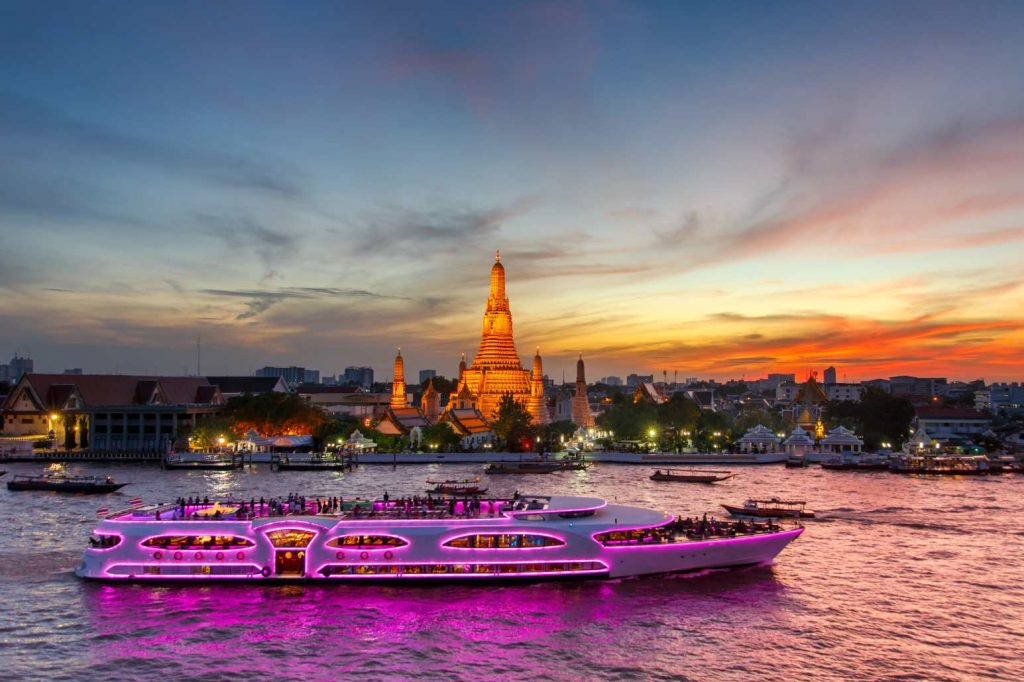
The riverfront on both sides of the crossing has grown into something of a dining destination in its own right, largely thanks to the view. Restaurants along Maharaj Road and around Tha Tien look directly across at the illuminated prang, making this stretch a favorite for a sunset meal or an evening drink with the temple lit up in the background. Reservations are worth making ahead for tables with a direct river view, especially around sunset when the best spots fill quickly.
Market Near Wat Arun
Tha Tien Pier doubles as the gateway to Tha Tien Market, a small riverside market known for dried seafood, local snacks, and a cluster of cafes tucked into its old shophouses. It’s an easy stop before or after the ferry crossing, whether you’re grabbing a quick bite, a cold drink, or picking up something to bring home. A short boat ride further up the river, Wanglang Market is another favorite for visitors combining a temple day with local street food.
Set beside Wanglang Pier on the Thonburi side, it’s a lively, workaday market known for affordable Thai eats, fresh produce, and casual clothing stalls, and it pairs naturally with a Wat Arun visit since the cross-river ferries connecting the two run throughout the day.
When Should You Go to the Temple?
Wat Arun typically opens at 8:00 AM and closes at 6:00 PM in the evening, with last admission around an hour before closing — it’s worth checking the current hours on the day of your visit, as they can shift slightly. Arriving close to opening time means cooler weather, thinner crowds, and soft morning light on the porcelain surface, which is when the temple lives up to its name most fully.
Late afternoon is the other favored window, particularly in the last hour before sunset, when the western light catches the prang and throws long shadows across the detail work. Since the temple grounds close before actual sunrise, the classic dawn photo is usually taken from the opposite riverbank near Tha Tien rather than from inside the complex. The cooler months between November and February also tend to make for the most comfortable visit overall, with clearer skies and lower humidity.
The Best Place to Stay Near Wat Arun
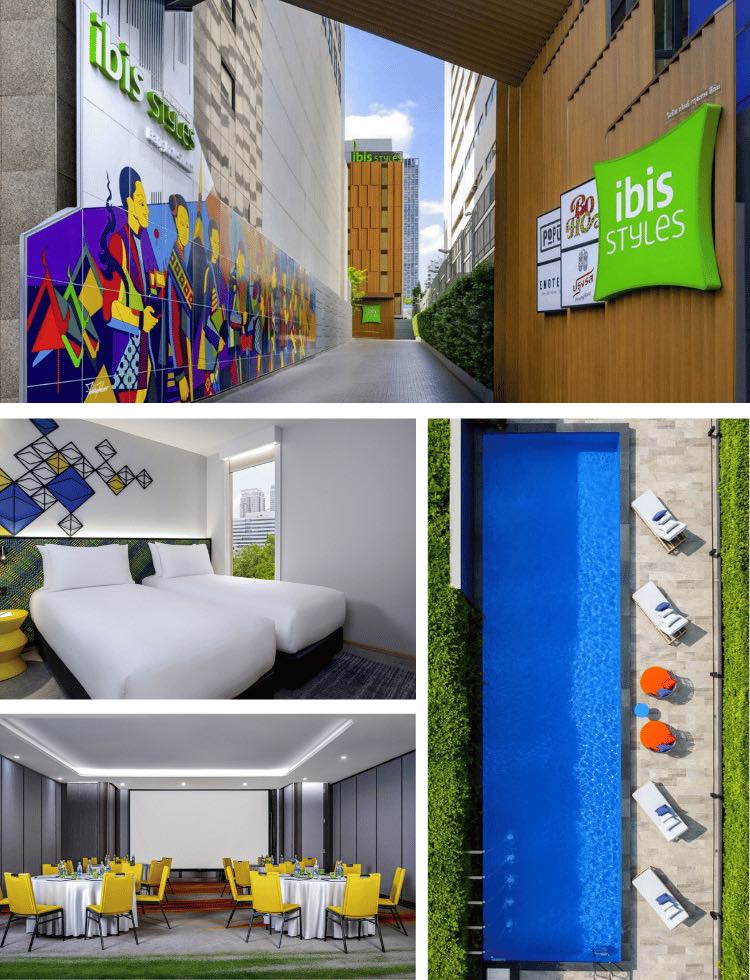
Wat Arun, Wat Pho, and the Grand Palace form a tight loop connected by a short walk and a quick ferry ride, and basing yourself nearby makes it easy to move between them at your own pace. ibis Styles Bangkok Silom offers a comfortable, well-located base with easy access to the BTS and MRT lines that connect straight through to the riverside temples, making it simple to plan a morning at Wat Arun without an early alarm or a long transfer.
For travelers looking to make the most of their stay, it’s worth checking the latest ALL-Accor promotions in Bangkok before booking, as seasonal rates and perks are regularly updated for guests planning a Rattanakosin temple circuit alongside their stay.
FAQs – Wat Arun
Q: Where can I get the best view of Wat Arun?
A: The best views of Wat Arun can be enjoyed from Bangkok’s east bank, across the Chao Phraya River.
Q: Can I buy an entrance ticket for Wat Arun Ratchawararam online?
A: Wat Arun does not have an official standalone online ticketing website. Foreign visitor tickets cost 200 THB and must be purchased with cash directly
Q: How do I get to Wat Arun from Wat Pho?
A: From Wat Pho, walk to Tha Tien Pier and take the cross-river ferry to Wat Arun. The ferry ride takes only a few minutes and is one of the easiest ways to reach the temple.
Ibis Styles Bangkok Silom ☆☆☆
289 Silom Road, Silom Sub-district, Bangrak District, 10500 Bangkok
Thailand
Tel. 02 352-5999
Fax.02 352-5900
HB6N1@accor.com